Victoria’s Secret: The Marketing Cost of Killing the Fantasy
16/10/2026 | Uncommon Sense
By · 04/09/2026 · 4 min read
Cosmetic marketers no longer wait for a problem to appear. They sell her the problem before she has one.
There is a reason the evil queen in Snow White is so memorable. She does not simply ask whether she is beautiful. She asks whether she is the fairest of them all. Beauty, in the fairy tale, is not merely something to possess but something to be measured against others. The queen tightens the laces of the bodice around Snow White, and the image is a useful one for thinking about beauty today. The corset evolves. The pressure does not.
Every generation gets its own version of the ideal body. In the 1990s and 2000s, it was sunbeds and size zero. In the 2010s, beauty standards shifted towards the BBL and exaggerated curves. Today, filler faces, sculpted cheekbones, plumper lips and an apparent intolerance of wrinkles dominate the aesthetic. The procedure changes, but the commercial proposition remains remarkably consistent. Here is the standard. Here is the gap between you and it. Here is the product that can close it.
This is where the subject becomes interesting for marketers. Beauty standards are not invented by advertising departments from scratch. They emerge from biology, status, fashion, celebrity, sexuality, peer comparison and culture. Men’s preferences matter, as do women’s competition with one another. Pornography, reality television, celebrity culture and social media have created an enormous visual environment in which particular bodies and faces are repeatedly presented as desirable. Marketing enters that environment and turns desire into demand, giving consumers a product with which to pursue the standard they have learned to recognise.
The question is not whether marketing creates insecurity. It is whether marketing can teach us what we are supposed to be insecure about.
Consider the language of “preventative Botox”, or, more alarmingly, “Baby Botox”. It takes something once sold as a treatment for visible signs of ageing and turns it into something young women are encouraged to start before they have them. The pitch is reassuringly incremental: start small, start early, freeze time before time has a chance to leave its mark. But ageing is not something Botox can truly prevent. It is a biological process. What the influencer-led marketing sells instead is the idea that a young woman’s natural face is something to be managed before it becomes a problem. Millions of Snow Whites are placed on the conveyor belt, taught to look at a face that has barely begun to age and imagine what might eventually need fixing. Just type in “get botox with me” on TikTok, and prepare to be horrified.

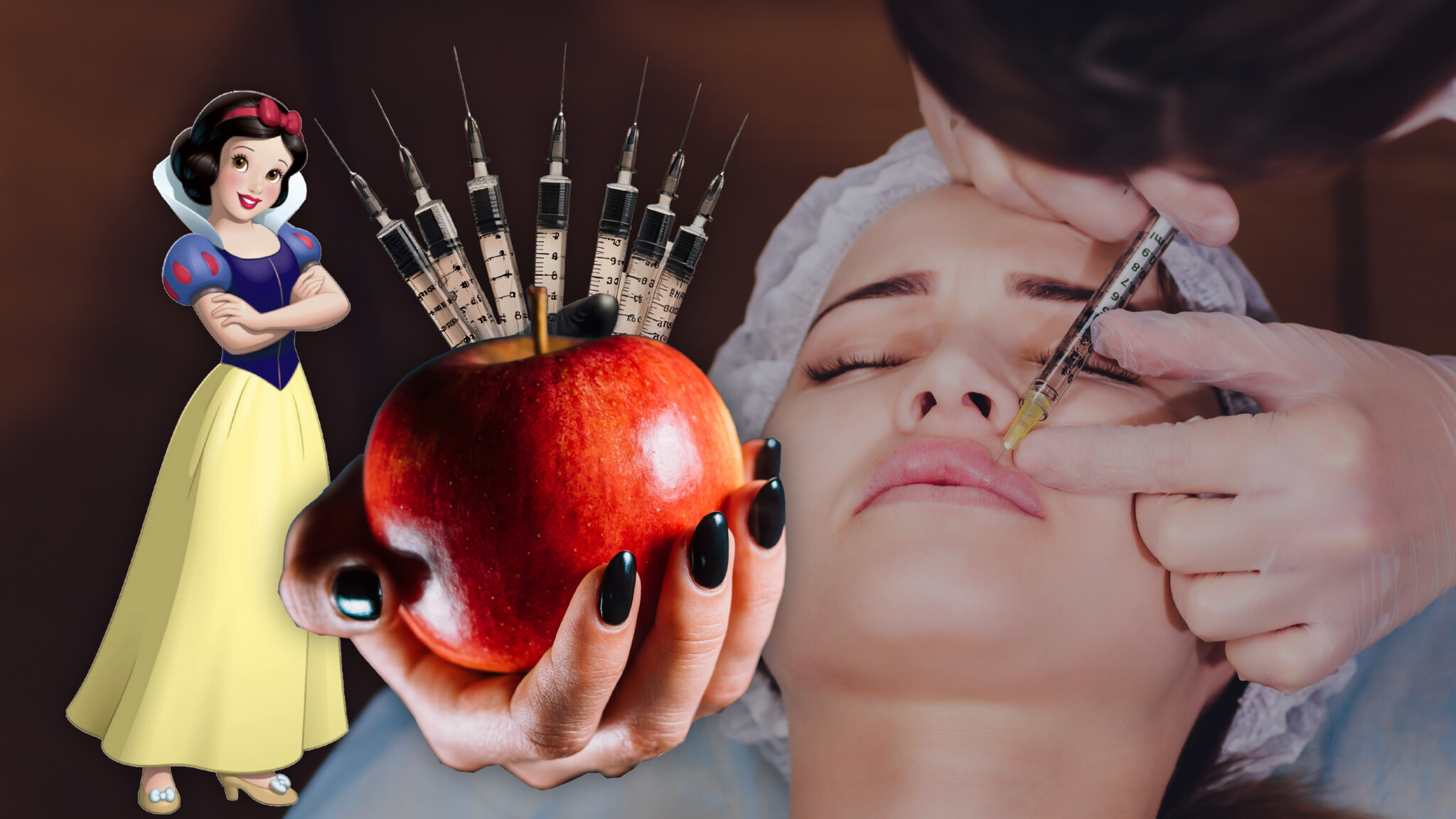
One of today's most worn corsets is sold in a syringe.
That creates a particularly powerful consumer relationship. If small doses are presented as maintenance rather than intervention, each treatment becomes the justification for the next. A young woman may never know what her unaltered face would have looked like as she grew older. This is the shift from restoration to optimisation. The product is no longer simply fixing what time has taken away. It is helping define what needs fixing in the first place. For marketers, that is an extraordinary proposition. You no longer have to wait for the customer to have a problem. You can sell her the problem before she has one.
The advertising industry’s regulators clearly recognise the danger. Since 2022, UK advertising rules have prohibited cosmetic intervention advertising from being directed at under 18s, including through social media and influencer marketing. The ASA also says marketers must not trivialise procedures or exploit insecurities. But even that feels like a low bar. Turning 18 does not mean someone has finished becoming the person they will be. We recognise this with tattoos, where people can change their minds as they mature. Cosmetic marketing should be held to a similarly responsible standard when targeting young adults who may have decades to live with the image of themselves that the industry helped create.
One ASA ruling illustrates how easily the boundary can be crossed. In 2019, the Royal Tunbridge Wells Skin Clinic advertised lip fillers with the question: “Is your daughter beginning to take an interest in LIP FILLERS?” The ASA ruled that the ad was irresponsible because it presented fillers as normal for young women and teenagers, and suggested that parents should support them, without adequately communicating the risks.
But the more important development is that the advert no longer needs to look like an advert.
In 2023, the Erdem Clinic worked with influencer Millie Bracewell, who documented her breast augmentation on TikTok. The content included an affiliate discount code, hospital footage and videos of her experience. The ASA ruled that the posts were marketing communications and had not been sufficiently restricted from under 18s. TikTok’s “For You” feed meant the content could reach people beyond the influencer’s followers, including young people.
This is the fundamental change in cosmetic marketing. The traditional advert tells you what you could look like. The influencer shows you what she did. One feels like advertising. The other feels like social proof.
And that is why the market deserves scrutiny. Marketers – whether they comprise the clinics or their influencing footsoldiers – do not simply sell the procedure. They help establish the standard against which the consumer judges herself, then place the solution conveniently alongside it. The market is a mirror, but mirrors can be manufactured.
Every generation gets its corset. The question for modern marketers is not whether beauty standards will exist. It is whether they are simply selling the laces, or helping to tighten them.
We build marketing on evidence about how people behave, not on what the industry hopes they will. More of our thinking is here.