TikTok Just Built a 400,000-App Ad Network. That’s Exactly the Problem.
08/10/2026 | Uncommon Sense
By · 09/10/2026 · 4 min read
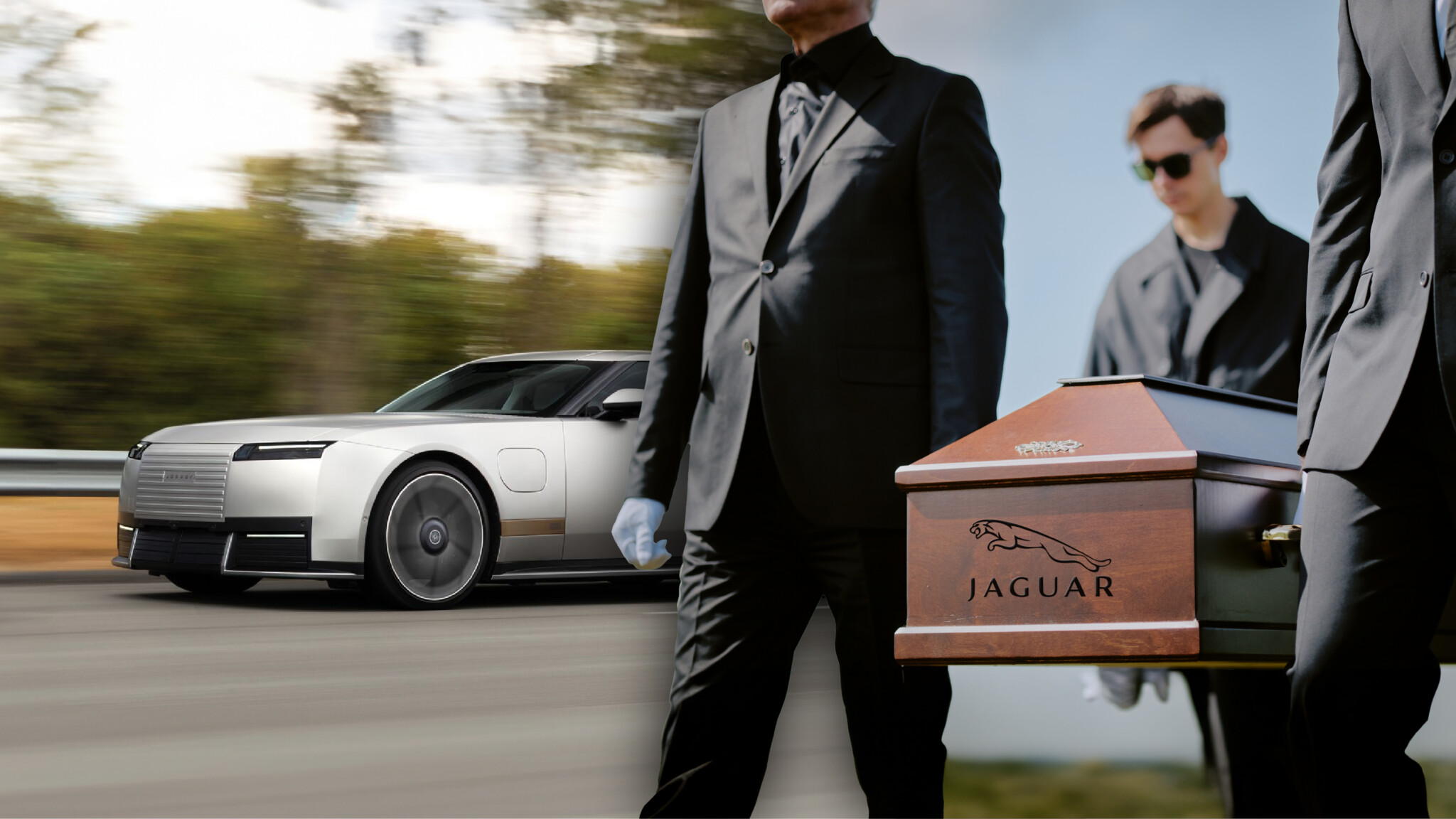
The Type 01 is fast, bold and British-built. It just isn’t beautiful, and beauty was always the point of Jaguar.
On 7 October, in New York, Jaguar finally showed us the car. After two years of mood films, a pink concept and a social media pile-on that reached as far as Elon Musk (“Do you sell cars?”), the Type 01 is real. It is a four-door electric grand tourer with more than 1,000PS, up to 450 miles of claimed range and a starting price of around £130,000. Orders open early next year, and deliveries follow in the second half of 2027.
On paper, it is an impressive machine. It is also, unmistakably, the end of something.
A car that answers a question nobody asked
Jaguar’s managing director, Rawdon Glover, says the Type 01 “distils the essence of Jaguar into a luxury grand tourer for a new era.” That is a bold claim for a car with no rear window, a 7-inch touchscreen and a roofline built to be argued about. Ian Callum led Jaguar design for two decades and drew the F-Type and the XF. He was blunter about the concept the Type 01 so closely follows: “It’s brutal, but it lacks beauty, and I think a criterion of Jaguar is to be beautiful.”
He is right, and the point goes deeper than taste. Beauty was never decoration at Jaguar. It was the product.
What Jaguar actually sold
Strip away the wood and leather and Jaguar sold something very specific: a way of being seen. The E-type, the XJ, the XK. Each one let its owner signal status without shouting and taste without trying, with a particular British cool that no German saloon ever quite managed. Grace, space, pace. The old line said it in three words.
That is not nostalgia. It is psychology. Status and mate attraction are innate drives, and a beautiful car appeals to both before the buyer has read a single spec sheet. Jaguar also offered tribe: owning one put you in a club of people who preferred character to clinical efficiency. None of those drives disappeared when the industry went electric. Buyers still want to be admired. They still want to belong.
The 2024 rebrand treated all of that as baggage. “Copy nothing.” “Delete ordinary.” The leaper was sidelined and the growl replaced by a manifesto. The existing customer, typically a man in his fifties, was politely shown the door in favour of a younger, wealthier audience that had never asked for Jaguar in the first place. Meanwhile the showrooms emptied. In January this year Jaguar registered six new cars in the UK, against 783 a year earlier.
Six.
The road not taken
The frustrating part is that Jaguar already had the answer. The I-Pace, launched in 2018, beat the German establishment to market with a premium electric car and was crowned World Car of the Year. It proved Jaguar could go electric and still feel like Jaguar.
Imagine the follow-up. An electric XJ: long, low and beautiful in the way only Jaguar ever managed, priced against the Mercedes EQE and BMW i5 rather than pushed into six figures. A leaper on the bonnet. Silence instead of a growl, but the grace intact. A car that told loyal owners “this is still yours” and told new buyers “this is what good taste looks like”.
Electrification was a change of technology. It never needed to be a change of identity. Brands survive a new powertrain all the time; very few survive walking away from the people who wanted them.
The vacancy, and who might fill it
Here is the uncomfortable thought. If Jaguar no longer wants to build the charming, beautiful, attainably luxurious car, someone else will. The likeliest candidate is not in Coventry or Stuttgart. It is in China.
Chinese manufacturers already have what Jaguar has spent a decade short of: battery supply, fast development cycles, scale and deep pockets. What they have lacked is soul, and they know it. So they are hiring it. Giles Taylor, once Jaguar’s chief designer and later design director at Rolls-Royce, moved to FAW in 2018 to reshape Hongqi, China’s oldest car brand. His reading of the market is telling: buyers want “a luxury which isn’t soulless”. Hongqi’s electric saloon is priced from under €50,000 in Europe, and a UK arrival has been in the pipeline.
It is not a Jaguar. Not yet. But the talent, the intent and the money all point the same way, and the irony is hard to miss. British design thinking, honed at Jaguar, could end up handing a Chinese brand the very thing Jaguar decided it no longer needed.
Insight, not ideology
The lesson for any brand is simple: know what you actually sell. Jaguar once thought it sold cars, then decided it sold disruption. It always sold desire.
The Type 01 may yet find its buyers. A handful of wealthy early adopters will enjoy its audacity, and it may sell well enough in America to keep the brand alive. We hope it does. Nobody in British marketing wants to watch Jaguar fail.
But the Jaguar many of us grew up wanting, the one that made you turn your head in a car park, has gone. Somewhere, a design studio is already sketching its replacement. The only question is whose badge it will wear.