The Bias That’s Quietly Killing Your Creative
25/09/2026 | Uncommon Sense
By · 20/04/2026 · 4 min read
There is a particular kind of business that believes profit is a stain to be scrubbed off. Not balanced, not moderated, not set against other concerns. Scrubbed off. Apologised for. Redeemed by a certificate from a non-profit in Pennsylvania. That business is the B Corp, and the whole enterprise rests on a moral framework that is quietly poisonous to commerce itself.
We know how this works. A company that pays its staff, serves its customers, supplies its neighbours and contributes tax has discharged its duty to society several times over before breakfast. Voluntary trade, freely entered into by two parties who both come out better for it, is not something that needs redeeming. It is the redeeming thing. Profit is evidence that the arrangement worked.
The B Corp movement cannot accept this. Its founding assumption is that commerce is a kind of original sin and that activism is the baptism required to wash it off. Employ a thousand people and you have done nothing. Add a B Corp logo to your packaging and you have joined the righteous. The badge is not a description of what a business does; it is an absolution for daring to exist as one. A moral posture dressed up as a commercial standard.
And the posture was always hollow. The old points-based system let a company trade a weak score in one area for a strong one elsewhere. Princess Polly, the Australian fast fashion retailer, secured the badge in late 2025. Nespresso has carried it. So has a Nestlé subsidiary. If a framework accommodates multinationals with documented supply chain problems alongside the organic soap maker in Hackney, it is telling you nothing about either. Dr. Bronner’s, one of the highest-scoring B Corps in the world, worked this out in February 2025 and walked away citing compromised integrity. When your star pupil leaves the exam hall and says the test is rigged, the test is finished.
B Lab’s 2026 overhaul tightened the screws. Mandatory minimums across seven impact areas. Compulsory third-party audits. Science-based emissions targets. The new standards will catch some of the more egregious greenwashers. They will also flatten the small firms who took the thing seriously. Analysis of the public database found around six hundred UK companies sitting at or just above the old threshold, many now at immediate risk. A ten-person agency in Bristol cannot absorb a climate accounting regime. A FTSE-listed conglomerate can. The movement is sorting itself, slowly, into exactly the corporate shape it was supposedly designed to push against.

Gen Z shoppers are wondering: 'Is Princess Polly fast fashion?'
Every bureaucratic system, given time, serves the institutions large enough to feed it. The B Corp certification is no exception: months of work, a compliance function, a recertification cycle that lifts the bar each time. Companies that can afford it treat it as marketing spend. Those that cannot are politely shown the door.
Then there is the legal tension the movement prefers to ignore. Directors of UK companies have a duty under section 172 of the Companies Act 2006 to promote the success of the company for the benefit of its shareholders. B Corp certification requires firms to amend their articles of association to enshrine stakeholder interests alongside, and often above, those shareholders. You are voluntarily signing up to subordinate the owners of the business to a shopping list of social objectives. No high-profile challenge has landed yet. Give it time. We made a related case in advertising virtue.
The real damage is cultural. B Corp status has become a signalling device for a worldview in which business is guilty until proven virtuous, in which commerce must be redeemed by activism, in which a good product honestly sold is somehow insufficient. The same dynamic shows up in product marketing – see the problem with selling virtue.
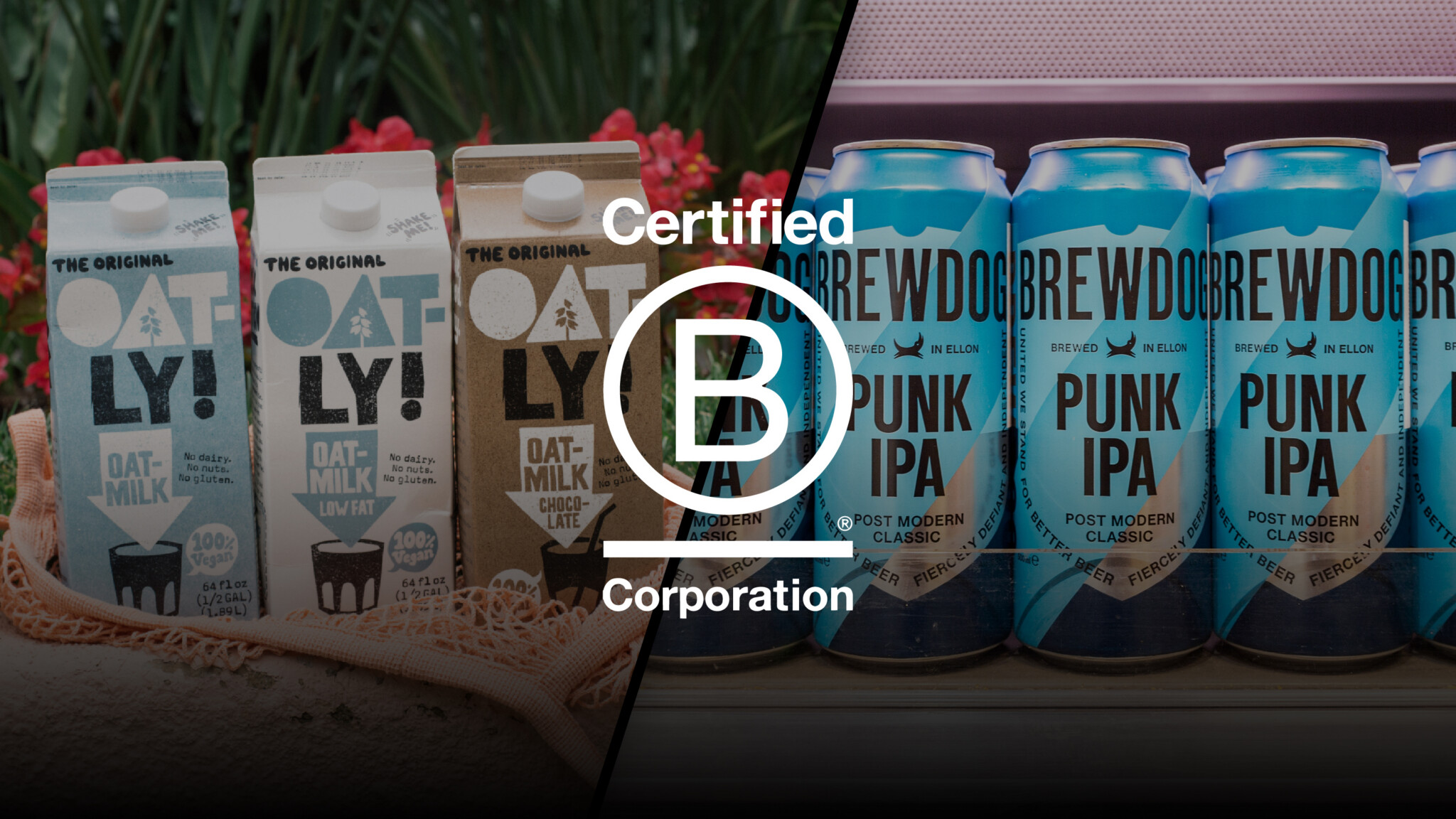
BrewDog proved the punchline in 2022, decertified after reports of a toxic workplace. The badge told customers, staff and investors nothing about what the company was actually like inside. Oatly made the same point from the opposite direction. In 2020 the oat milk brand, B Corp certified and built on environmental positioning, took a $200 million investment from Blackstone, a firm whose founder was a major Trump donor and whose portfolio had alleged ties to Amazonian deforestation. Consumers revolted.
The certification stayed. If a company trading on green credentials can take money linked to rainforest clearance and keep its status, the status is worth nothing.
Businesses do not need a certificate to behave decently. They need customers, competence, and the freedom to get on with it. If the product is good and the conduct is honest, no committee in Pennsylvania improves on that. If the product is bad, no logo hides it for long. The B Corp project was sold as a way to hold business to a higher standard. It has done the opposite: lowered the bar for the insincere, raised it beyond the reach of the sincere. That is not a movement. That is a racket.
Tired of certifying instead of selling? Get in touch.