The car that flew, and the brand that never needed to advertise
21/10/2026 | Uncommon Sense
By · 13/04/2026 · 7 min read
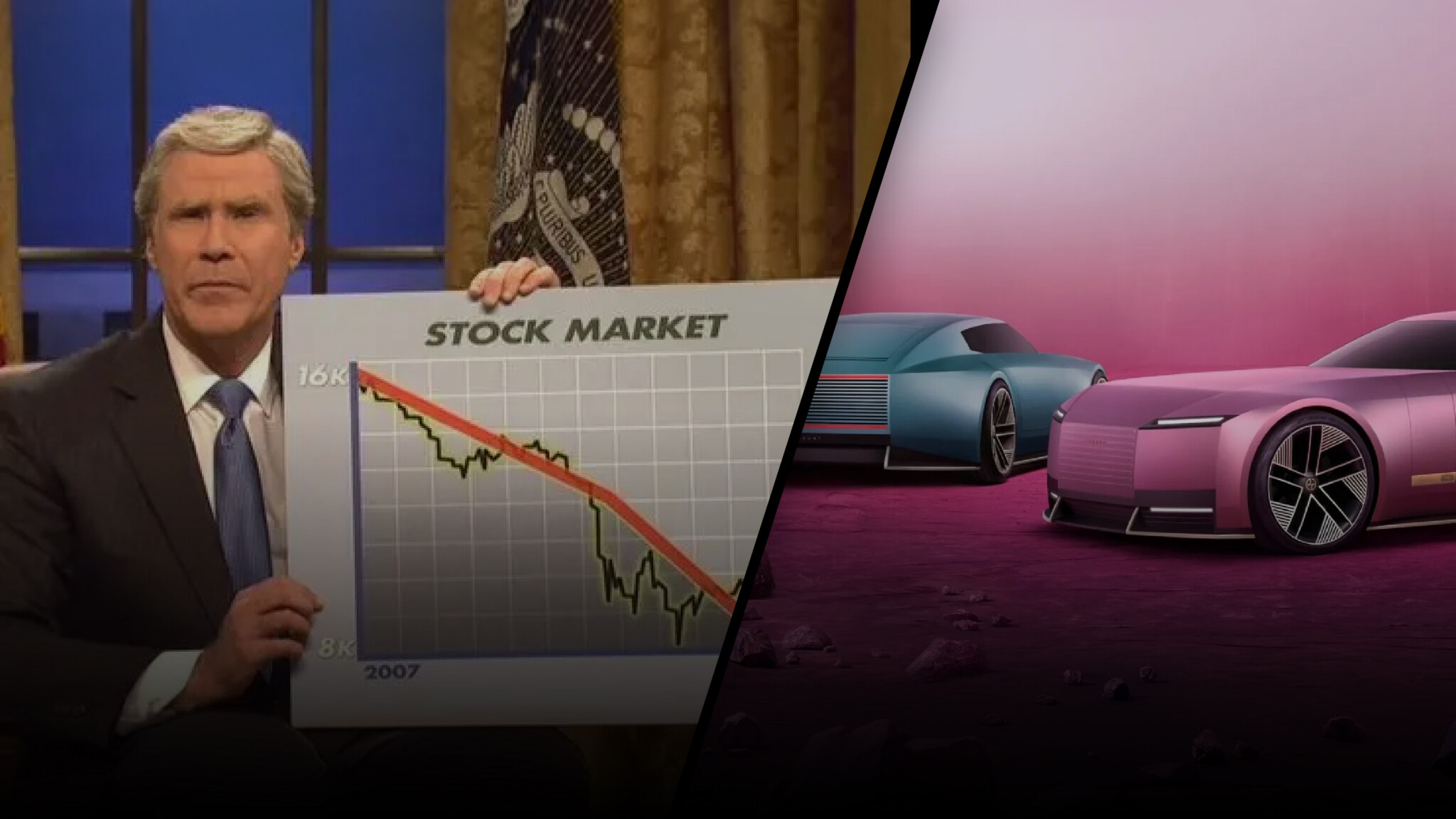
Cast your mind back to early 2025. Jaguar, one of Britain’s most storied car brands, unveiled a teaser campaign that managed to unite Nigel Farage, Donald Trump and Elon Musk in collective bewilderment. The advert featured androgynous models in a sci-fi aesthetic, no cars whatsoever, and the slogan “Delete Ordinary.” Two weeks later came the car itself – a bright pink concept unveiled at an art fair in Miami. Not a motor show. An art fair.
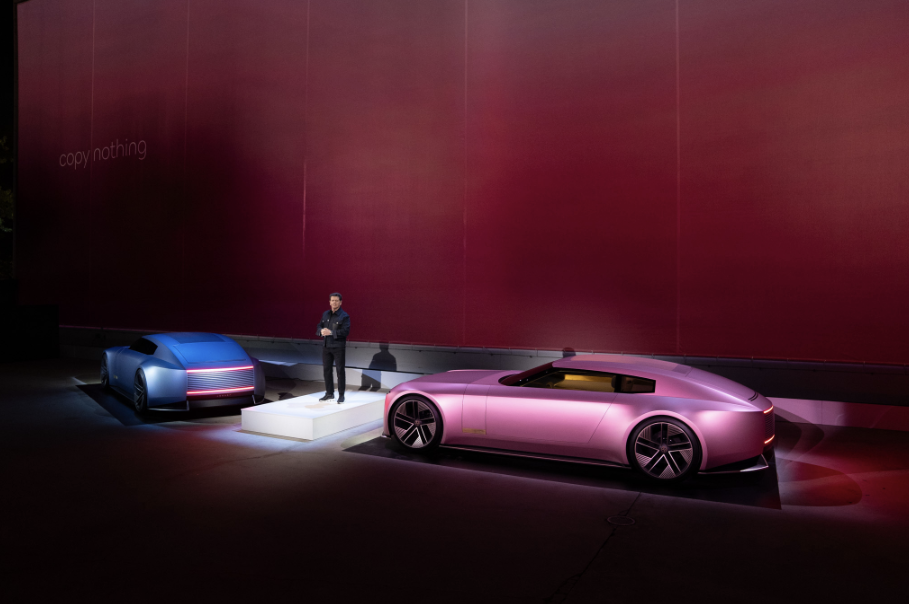
Bright colours, defiantly unconventional, and unveiled at a Miami art fair rather than a motor show - Jaguar’s concept car became the defining image of a rebrand that generated attention, but raised serious questions too.
Now, eighteen months on, the dust has settled enough to ask the obvious question: what on earth were they thinking? And a harder one: will Jaguar even survive the year?
I’ve been following this story closely since the rebrand dropped, and the more you look at it, the more it reads like a case study in strategic misalignment. The campaign reached 70 million users on social media in seven days. Mentions of the brand surged from roughly 40,000 a week to over 725,000. By any engagement metric, it was a roaring success. But engagement isn’t the same as desire. Getting people to talk about you is easy if you’re willing to make yourself a laughing stock; the tricky bit is getting them to spend £120,000 on your product afterwards. And I suspect that most of those 725,000 mentions were not expressions of admiration.
Let’s be fair about one thing. Jaguar needed to do something. Sales were declining. The customer base was ageing. One dealer described the typical Jaguar buyer as a “white, middle-class British male, aged 50 to 70,” with a box of tissues on the back shelf and a trilby on the parcel shelf. Not a growth demographic. The decision to move upmarket made strategic sense on paper.
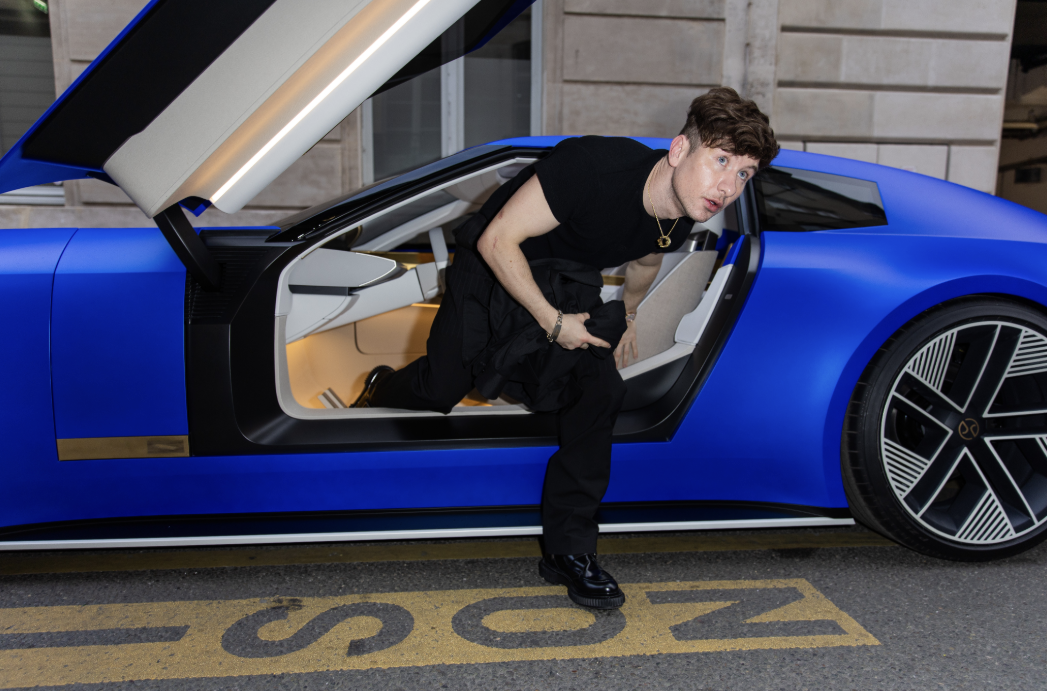
Actor Barry Keoghan, a Gen Z-favoured actor, arrived at Paris Fashion Week in Jaguar’s Type 00 concept car, a rollout that jarred with the brand’s traditional customer base and drew a negative reception.
So the strategy wasn’t the problem. The execution was a catastrophe.
The campaign was led by Gerry McGovern, then Jaguar’s chief creative officer, who told journalists it was a “complete reset” for the brand. He has since left the company. Draw your own conclusions. What he left behind was a rebrand so detached from the product it was meant to sell that it actively repelled the people who might actually buy it. “Delete Ordinary.” “Copy Nothing.” These aren’t slogans for selling cars to wealthy professionals. They’re slogans for selling trainers to sixth-formers who’ve just discovered Bauhaus. The entire aesthetic – the androgyny, the garish colours, the deliberate absence of anything resembling an automobile – suggested that Jaguar’s marketing department had lost sight of its audience and started speaking primarily to itself.
A useful comparison here is Tesla’s Cybertruck launch in 2019. When Elon Musk stood on stage and invited a colleague to throw a metal ball at the vehicle’s supposedly unbreakable windows, the glass cracked – twice. It was an embarrassing, very public failure. And yet within days, Tesla had secured well over 100,000 pre-orders. The difference is that the mishap didn’t contradict Tesla’s brand; it reinforced it. The company was already perceived as bold, experimental and slightly chaotic. More importantly, the product remained the centre of attention. Jaguar’s campaign suffered from the opposite problem. It was coherent, polished, and widely seen – but coherent in a direction that had very little to do with selling cars.
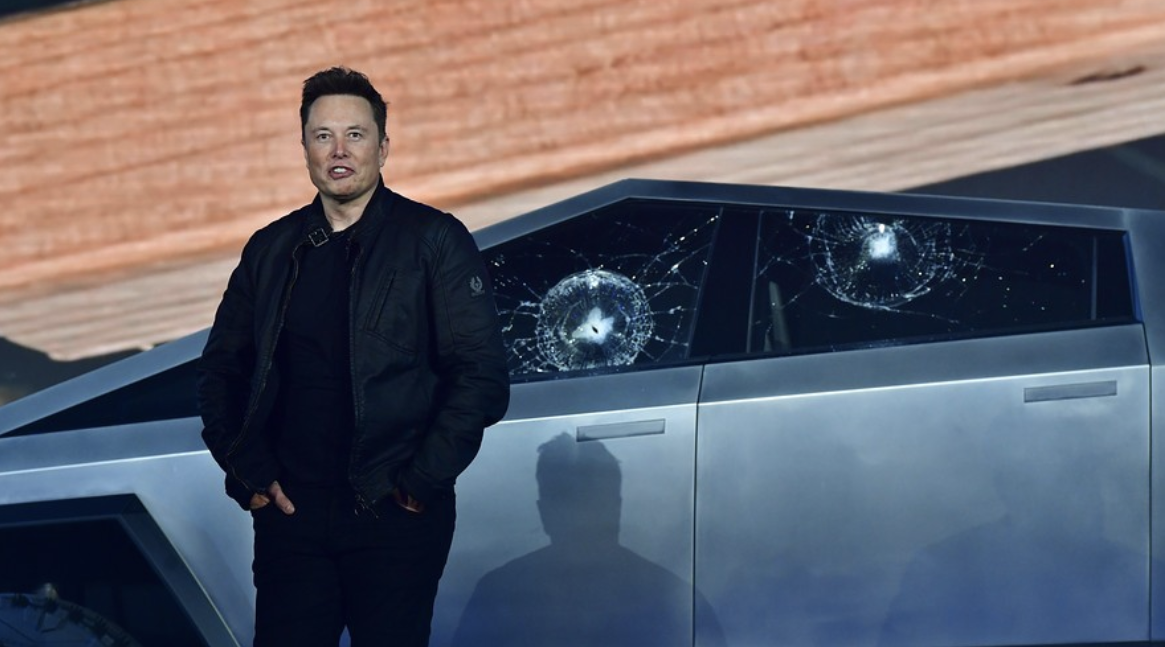
Elon Musk’s Cybertruck launch moment in 2019: a failed “unbreakable” window demo that still reinforced Tesla’s inherently disruptive brand identity.
Ray Massey, motoring editor of the Daily Mail and a man who has covered the industry for four decades, put it plainly: “If they’d done that 18 months or two years earlier, they might have got away with it. But by late 2024, there was already a backlash against what people call ‘woke’ – rightly or wrongly – and they walked straight into that.” He described the launch event as one of the most “bizarre” he had ever attended. This is someone who has been to hundreds of car launches. You don’t use that word lightly after 40 years in the business.
And the timing. The campaign landed just after Trump’s election victory, at precisely the moment the cultural mood was swinging hard against purpose-driven, identity-laden marketing. Gillette had already learned this lesson. Bud Light had learned it so brutally that the brand still hasn’t recovered. Jaguar’s creative team apparently didn’t get the memo. Or got it and ignored it, which is considerably worse, because it suggests the internal vision of the brand mattered more than the commercial outcome. That’s not marketing. That’s indulgence on someone else’s balance sheet.
I’ve written before about how marketing departments can become insulated from the customers they are meant to serve, and Jaguar’s rebrand is Exhibit Y. The campaign wasn’t aimed at people who buy £120,000 cars. It was aimed at people who work in advertising agencies and want to win awards at Cannes. There is a world of difference between those two audiences, and confusing them is a mistake that costs real money. Branding expert Nick Ede called Jaguar “a bit of a joke brand now” and said the campaign “felt more like an advert for a Magnum ice cream than it did for a car.” Brutal. But accurate.
Jon Evans, host of the CMO Uncensored Podcast, has called the campaign “marketing genius” on the basis that no amount of paid media could have generated the same level of attention. You hear this argument a lot from people in the industry and it drives me round the bend. I could set fire to my trousers in Trafalgar Square and get 70 million impressions; it wouldn’t help me sell anything except perhaps a cautionary tale. Attention without purchase intent is just noise, and noise doesn’t keep the lights on at a car factory.
Which brings us to the question nobody at Jaguar seems willing to answer honestly. They pulled every existing model off sale. The F-Type, the E-Pace, the F-Pace, the XE, the XF – gone, all of them. Dealership numbers were slashed from around 80 to fewer than 20. They openly stated they would be leaving as much as 90% of their previous owner base behind. They torched their existing business on the promise of a new one. And what’s arrived? A pink concept car and a rebrand that makes the company look like it’s being run by a design seminar.
Will they last the year?
I’m genuinely not sure. Rolls-Royce has just scrapped its plan to go fully electric by 2030. Bentley has pushed its EV target back to 2035. Both looked at the demand data and blinked. Jaguar, by contrast, has gone all in on an expensive bespoke electric platform, launching into a luxury EV market that may not yet exist in sufficient size to sustain them. They have no cars on sale generating revenue, a decimated dealer network, and a brand that half the country now associates with a strange publicity stunt rather than with the most beautiful car ever made.
Jaguar still defiantly includes the empty phrase “Copy Nothing” on its Instagram account, which currently enjoys 16.5 million followers. Scroll through the feed and it looks less like the output of a luxury automotive brand and more like the Teletubbies have been enrolled as the latest board of marketing directors. The comments tell their own story. “So you’re gonna start making proper cars again right,” writes one user. Another adds, more bluntly, “Come back Jaguar. We miss you.”
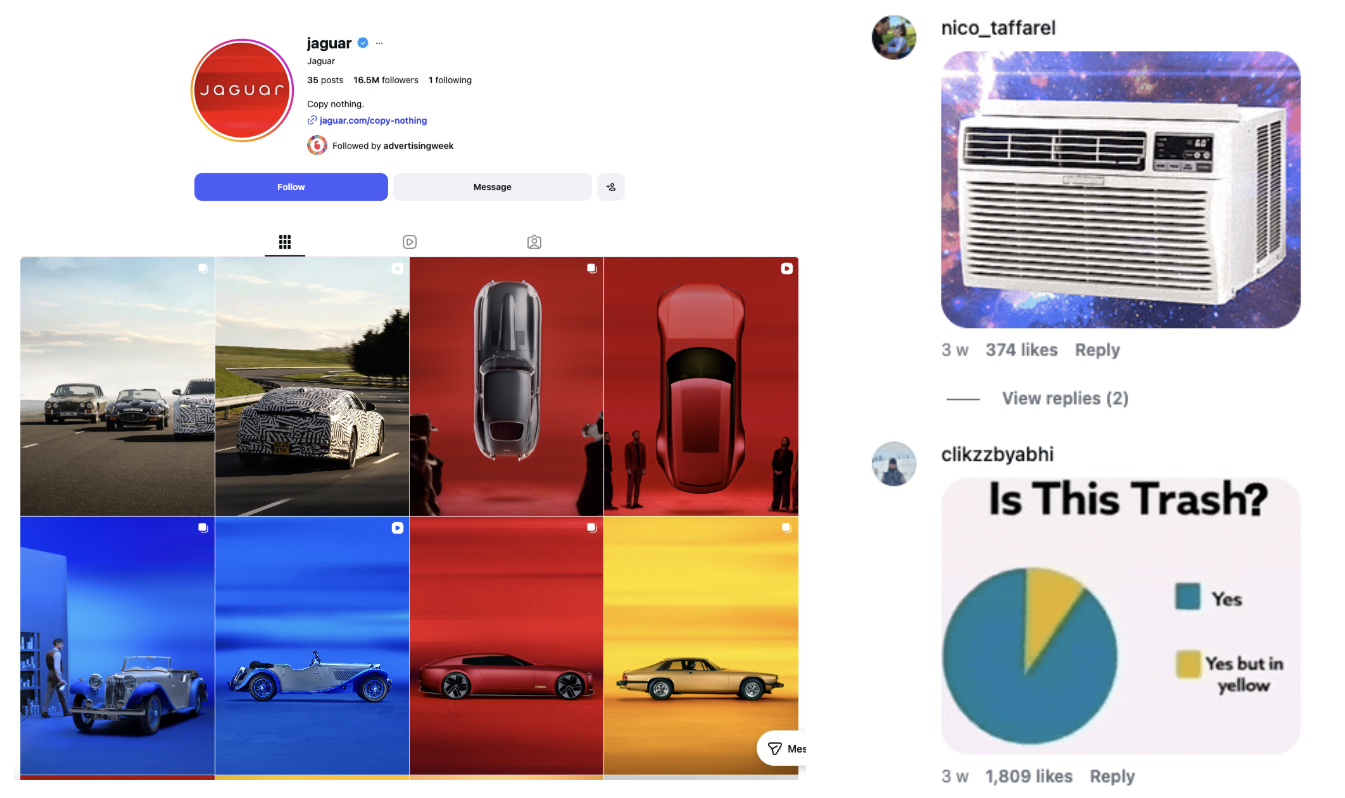
A sample of the online backlash to Jaguar’s rebrand, where the new Instagram aesthetic drew ridicule and confusion in equal measure.
Professor David Bailey from Birmingham Business School put it diplomatically: “I’m not entirely sure there really is a luxury electric car market yet.” That’s academic-speak for “this could be a catastrophe.”
And if it is a catastrophe, we all know what comes next. Another great British company, hat in hand, begging the taxpayer for a bailout. We’ve seen this film before. British Leyland. Rover. The pattern is depressingly familiar: decades of heritage, a period of mismanagement and strategic vanity, followed by collapse and a government cheque. Sir Keir would probably relish it – another opportunity to appear decisive while spending other people’s money, another chance for the state to extend its tentacles into private enterprise. Tata Motors, Jaguar’s Indian parent company, may decide the whole thing isn’t worth the grief and simply walk away. Then what? A fire sale of assets and a workforce left stranded because some marketing executives thought a pink car and abstract branding were more important than building vehicles people actually want to buy.
“They’ve bet the house on it,” said Massey. “Cats have nine lives. I’m not sure what number Jaguar is on.”
Here’s what makes this whole saga genuinely infuriating. Jaguar is a great British brand. The E-Type is still one of the most beautiful cars ever made. That heritage, that engineering credibility, that emotional resonance – it deserved better than being sacrificed by people who seemed more interested in reinvention than in continuity.
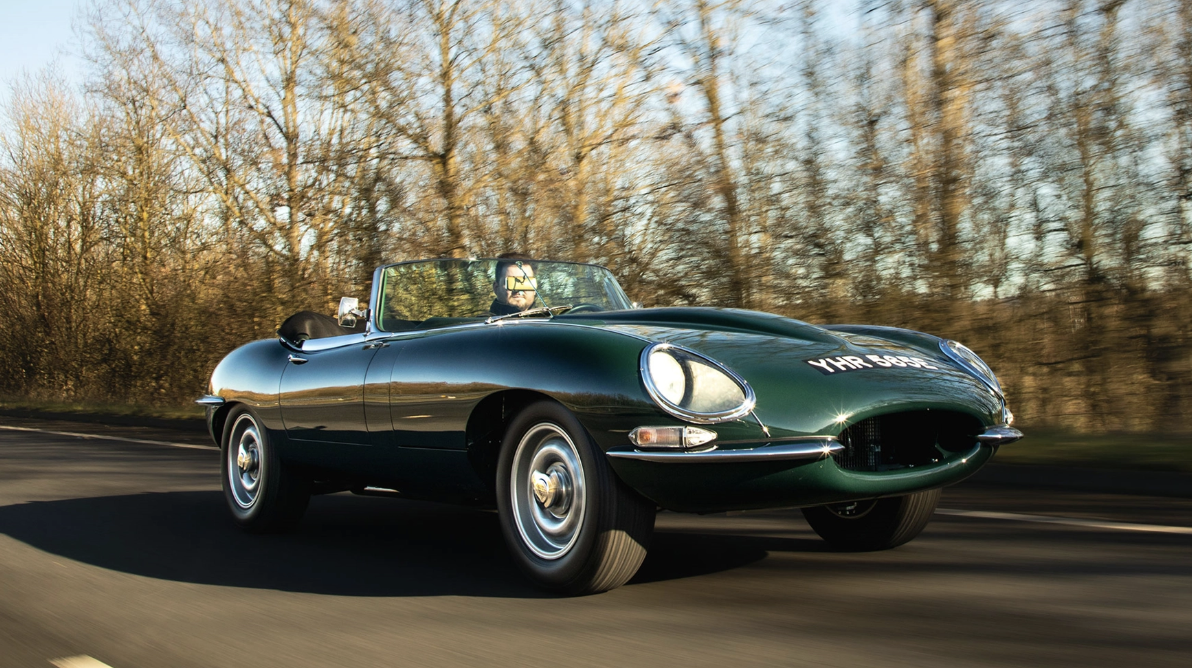
The Jaguar E-Type, widely regarded as one of the most beautiful cars ever made, and a symbol of the engineering heritage and design legacy the brand is now being accused of abandoning.
The lesson is simple. Marketing exists to sell products. Not to win creative awards, not to impress other people in the industry, not to indulge internal visions detached from reality. Sell products. Jaguar forgot that. And if they’re not careful, the next chapter won’t be a rebrand – it’ll be an obituary, paid for by the British taxpayer.
Lee Taylor is the CEO and Founder of the marketing agency Uncommon Sense.
Spot the same misalignment in your own positioning? Get in touch.