
Sydney Sweeney’s Latest Ad Worked. That’s Why People Are Angry.
15/09/2026 | Lee Taylor
By · 05/03/2026 · 4 min read
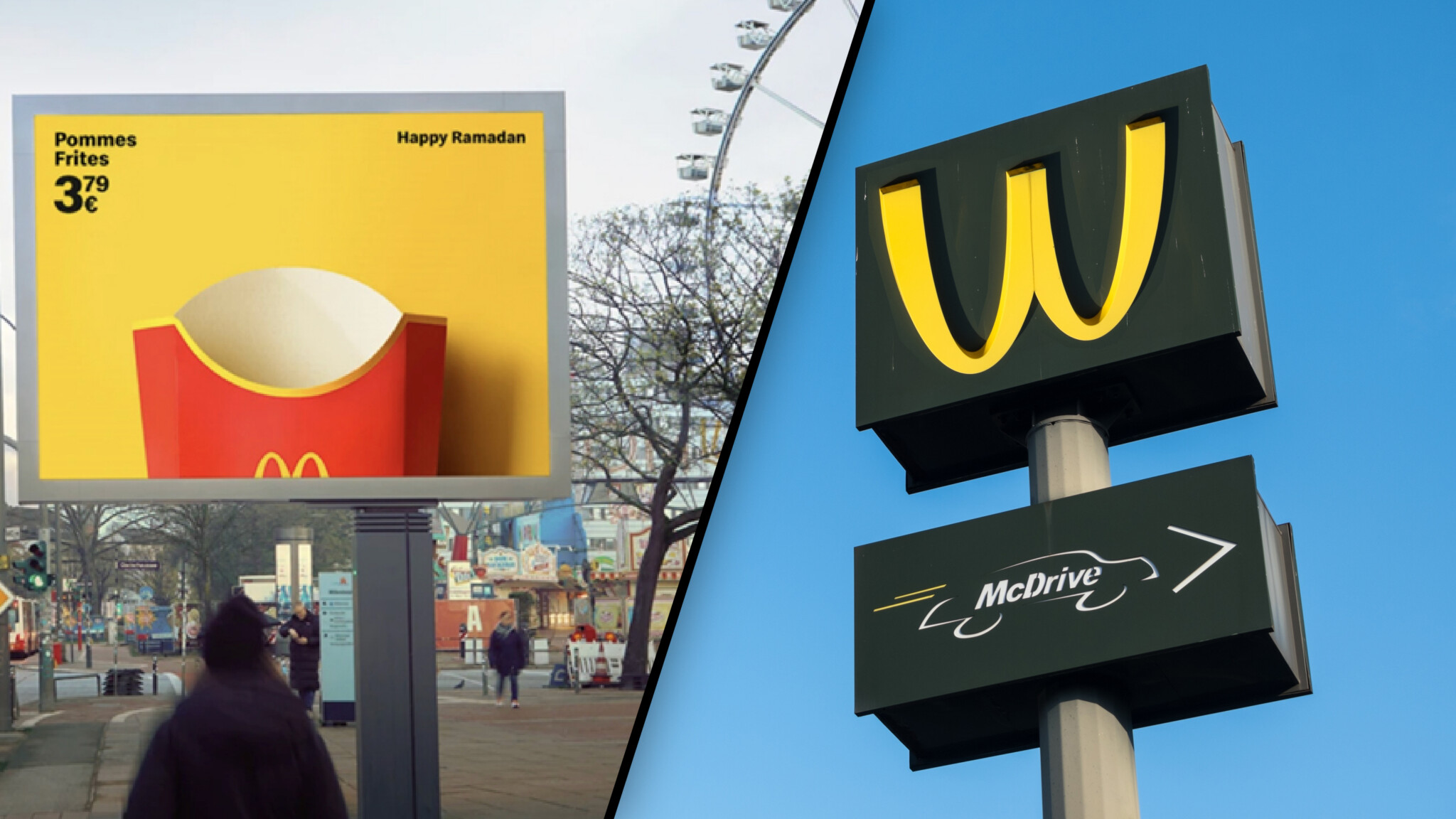
Turn the M upside down and you get a W for “woke”. Fitting, perhaps, for a campaign that suggests McDonald’s marketing priorities may have flipped – from selling burgers to signalling virtue.
The idea that DEI has quietly died is comforting, but it is not accurate. It has not disappeared from corporate life; it has simply changed tone, softened its language and re-entered through the front door of advertising, where moral signalling is easiest to disguise as strategy.
The latest example comes from Germany, where McDonald’s launched a Ramadan-themed outdoor campaign despite the fact that its menu is not halal and Germany’s Muslim population sits at roughly 6.5%. During daylight hours the food imagery on billboards disappears, only to reappear at sunset. The implication is that the brand does not want to tempt fasting Muslims during the day. It is framed as sensitivity. It is framed as respect.
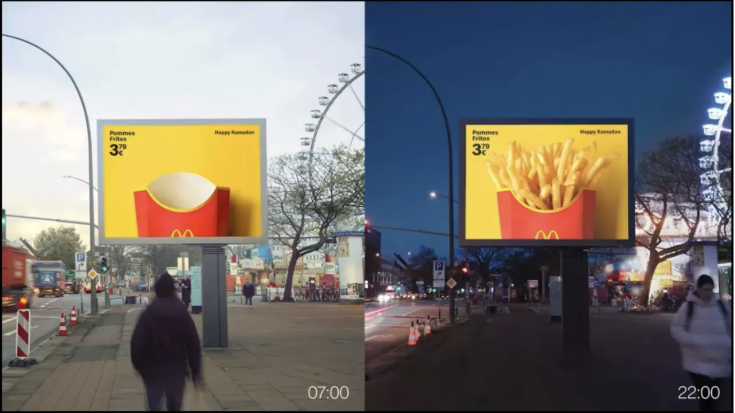
McDonald’s Germany removed food imagery from its Ramadan billboards during daylight hours, restoring it at sunset - a gesture framed as cultural sensitivity, despite the menu not being halal and Muslims comprising a small share of the population.
The commercial logic is far less clear.
A Muslim observant enough to fast during Ramadan is highly unlikely to break that fast with non-halal fast food. That is not controversial; it is behavioural reality. Which means the campaign is unlikely to materially shift purchasing behaviour among practising Muslims. Once that is acknowledged, the question becomes unavoidable: who is this really for?
It is not primarily for Muslims. It is for Germans. More specifically, it is for a segment of Western consumers who believe that visible accommodation of minority traditions is itself a mark of moral sophistication. The audience is not the fasting minority but the culturally anxious majority who equate brand deference with virtue.
Advertising departments did not identify a dormant Ramadan burger opportunity. They made a cultural calculation. They decided that demonstrating sensitivity would generate reputational approval within certain social circles. That approval may not translate directly into sales uplift, but it generates insulation from criticism and affirmation from progressive gatekeepers within media and creative industries.
This is the DEI mindset in commercial form. It does not begin with the question, “Will this materially increase demand within a defined target segment?” It begins with, “Will this demonstrate that we are on the right side of cultural expectations?” Those are not the same questions, and they do not produce the same campaigns.
For over a decade, major brands across the West have increasingly used advertising budgets to perform moral alignment. Pride campaigns, climate pledges, identity-centred storytelling and cultural reparations disguised as brand positioning have become standard practice. The underlying assumption has been that signalling correct values is strategically safer than focusing narrowly on product performance and price. That assumption has rarely been tested rigorously against long-term commercial outcomes.

BP’s “Keep Advancing” billboard - later challenged as greenwashing - illustrates how climate-conscious branding can outpace substantive change.
The problem is not tolerance. Liberal societies have always accommodated minority traditions. The problem is the creeping instinct to elevate accommodation into public self-critique, as if Western brands must continually demonstrate their willingness to subordinate their own cultural centre of gravity. That impulse does not emerge from consumer demand as much as it emerges from internal corporate culture, where marketing teams are increasingly drawn from institutions steeped in postmodern moral frameworks.
Corporations do not adopt DEI-inflected campaigns because they are inherently optimal for the balance sheet. They adopt them because the reputational economy inside institutions often outweighs the financial economy outside them. Creative teams seek awards and approval. Executives seek insulation from activist backlash. Agencies seek alignment with prevailing cultural currents. In that internal ecosystem, signalling can feel safer than selling.
McDonald’s Germany is unlikely to be attempting religious conversion through billboard choreography. It is attempting to demonstrate cultural sensitivity to a broader audience primed to reward that sensitivity. The billboard is less about fasting and more about optics, and optics have become a currency of their own in the advertising world.
This is why the claim that DEI is dead is premature. Structures embedded in institutions rarely vanish; they adapt. In higher education, despite political resistance, the overwhelming majority of universities continue to operate DEI programmes under various labels. In corporate marketing, the language may soften, but the framework persists. Brands are still encouraged to treat advertising as a platform for moral performance rather than commercial persuasion.
For marketers, the lesson is straightforward. Advertising works when it aligns with human incentives and behavioural realities. It fails when it confuses internal applause with external demand. Consumers ultimately buy on price, quality, status, convenience and identity in ways grounded in evolutionary psychology and economic trade-offs. They do not reliably reward abstract virtue displays detached from product relevance.
A Ramadan billboard that does not meaningfully expand the addressable market is not a growth strategy. It is a reputational hedge. And hedges can be useful in certain contexts, but they are not the same thing as building demand.
DEI has not been dismantled. It has been aestheticised. It now presents as subtle cultural choreography rather than overt policy. But the underlying premise remains that corporations should publicly perform their alignment with shifting moral fashions.
Brands would be wiser to remember their primary function. They exist to create value and persuade customers. Tolerance requires no theatrical flourish. Respect does not require centre stage. And advertising, if it is to remain effective, must be grounded in the incentives and desires that actually drive consumption rather than the applause of those who mistake signalling for strategy.
If this campaign feels familiar, there’s a reason. Much of our blog has traced how marketing has shifted from persuasion to performance. Dive into our other analyses to see how the industry went astray – and what it would take to reclaim clarity, confidence, and commercial focus.