Victoria’s Secret: The Marketing Cost of Killing the Fantasy
16/10/2026 | Uncommon Sense
By · 21/10/2026 · 5 min read
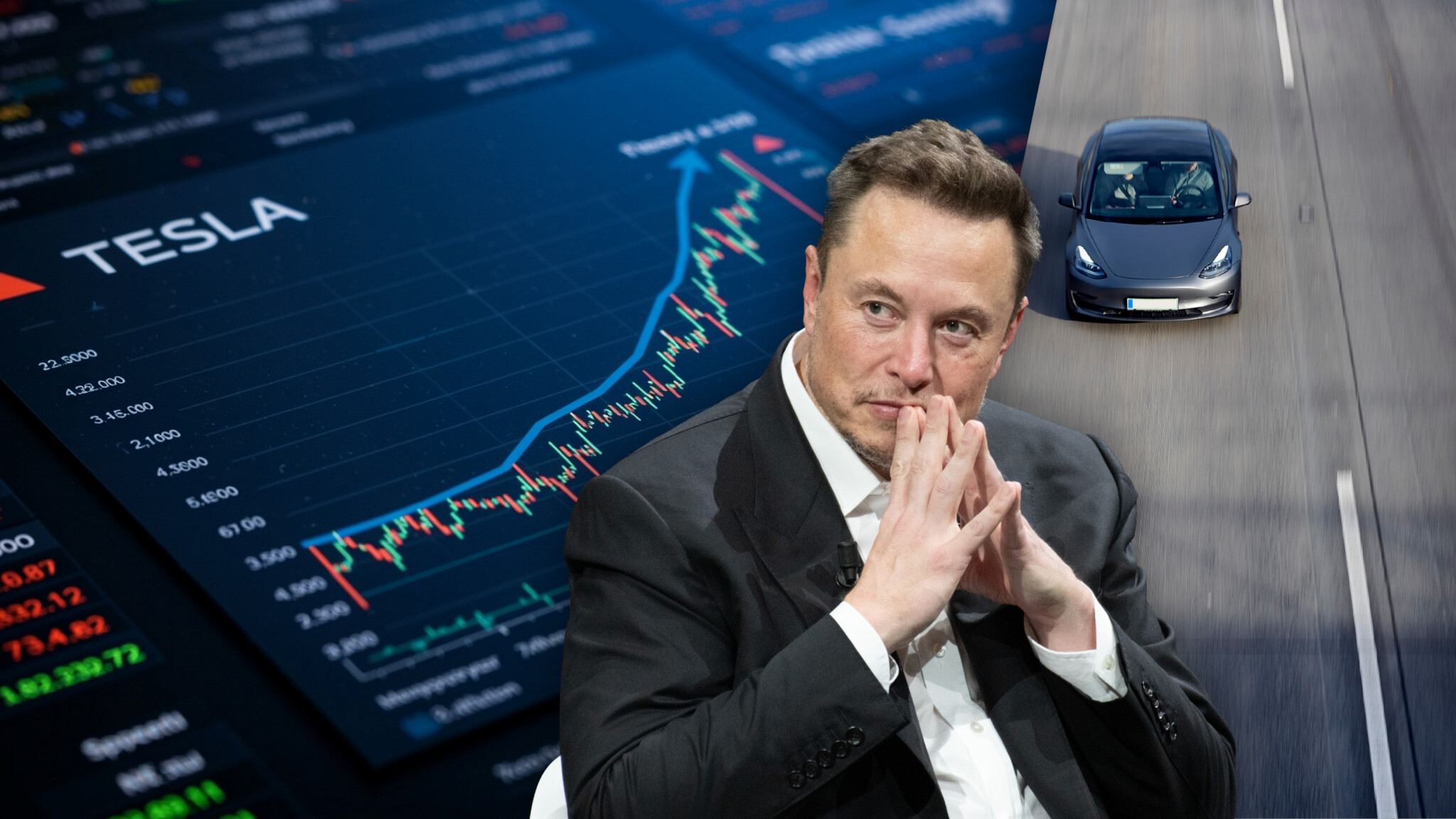
Turning the unthinkable into the everyday.
Last Thursday, at a SpaceX test facility in McGregor, Texas, Tesla unveiled its long-awaited Roadster in a way few carmakers would dare to ever attempt. Rather than rolling onto a stage, the car launched from a ramp, rose briefly into the air, turned over and came down on its wheels. “Well, it worked,” remarked Lars Moravy, Tesla’s vice president of vehicle engineering.
The Roadster was first promised in 2017. Production is now pencilled in for 2028, there is no published price, and a customer cannot currently order a car that flies. None of this stopped the footage travelling around the world within hours. In a single evening, Tesla showed the principle on which much of its brand has been built: a product nobody can yet buy can still command more attention than any media budget could reliably buy. The more interesting question is how a company that never adopted conventional advertising for most of its history came to hold such a place in the public imagination.
A plan hidden in plain sight
Tesla was founded in 2003 by Martin Eberhard and Marc Tarpenning, and Elon Musk joined the following year as lead investor and chairman. In 2006 he published what he playfully titled the “Secret Tesla Motors Master Plan”, a document of disarming simplicity: build a luxury car, use the proceeds to build an affordable car, and use those proceeds in turn to build one more affordable still.
As a business plan it was prudent; but as marketing it was clever. By entering the market at the top, Tesla made electric cars desirable long before it made them practical. The original Roadster, delivered from 2008, offered its early owners something scarce: a status symbol that was also a statement about where the future could head.
Spectacle as strategy
The Model S arrived in 2012 and turned that desire into a car a family could actually live with. The Model X followed, with falcon-wing doors that could sell the car in a single video. By the time the Model 3 was revealed in 2016, people were queuing outside showrooms to place deposits on a car none of them had yet driven. Tesla had learnt that the launch itself could be the product.
In 2018 the company went further, staging what may be the most audacious piece of product placement ever attempted. SpaceX’s Falcon Heavy carried Musk’s own cherry-red Roadster into space, with a mannequin named Starman at the wheel, and the image cost Tesla nothing in paid media. Seen in that light, last week’s SpaceX-powered unveiling was less a new idea than a sequel.
The cost of hype
Spectacle, however, borrows against the future. The second-generation Roadster, unveiled alongside the Semi in November 2017, took nine years to reappear. Model 3 production descended into what Musk himself called “production hell”. Full Self-Driving, meanwhile, has carried its ambitious name for years while still requiring a driver’s supervision, and it has drawn repeated scrutiny from regulators.
The most memorable misstep came in November 2019, when Tesla’s chief designer, Franz von Holzhausen, threw a metal ball at the Cybertruck’s “armour glass” to show that it could not be broken. It shattered, as did the rear window, and Musk conceded on stage that there was “room for improvement”. A more conventional brand would have buried the clip. Tesla let it circulate, and the cracked window became the defining image of the launch, later hailed as an accidental marketing triumph. Musk claimed hundreds of thousands of pre-orders within days. The lesson is an uncomfortable one for traditional marketers: even awkward attention turns into demand when an audience is already inclined to believe.
The owner as advocate
Perhaps the most striking feature of the brand is its owners. It is unusual to meet a Tesla driver who is not eager to show off what the car can do, and that eagerness has arguably been the company’s most effective channel.
One member of our team saw this first-hand in an Uber in Orlando, where the driver spent twenty minutes giving a guided tour of his car. He began with the self-driving features, which he said gave him real peace of mind when manoeuvring through large, chaotic car parks, then showed how the car could spot figures in the road, down to tiny animals crossing ahead. For a man who spends his working day in traffic, the car had made something routine feel a little more joyful. He was not trying to sell anything; he was simply proud.
That pride is no accident, because it maps closely onto the innate drives that shape consumer behaviour. There is status in owning the future before the neighbours do, and novelty in overnight software updates that make a familiar car feel new. There is risk avoidance in a car that watches the road for its driver, and there is tribe in a community of owners who share a vocabulary, from Autopilot to referral codes. Word of mouth was never a by-product of Tesla’s strategy; in many respects, it was the strategy.
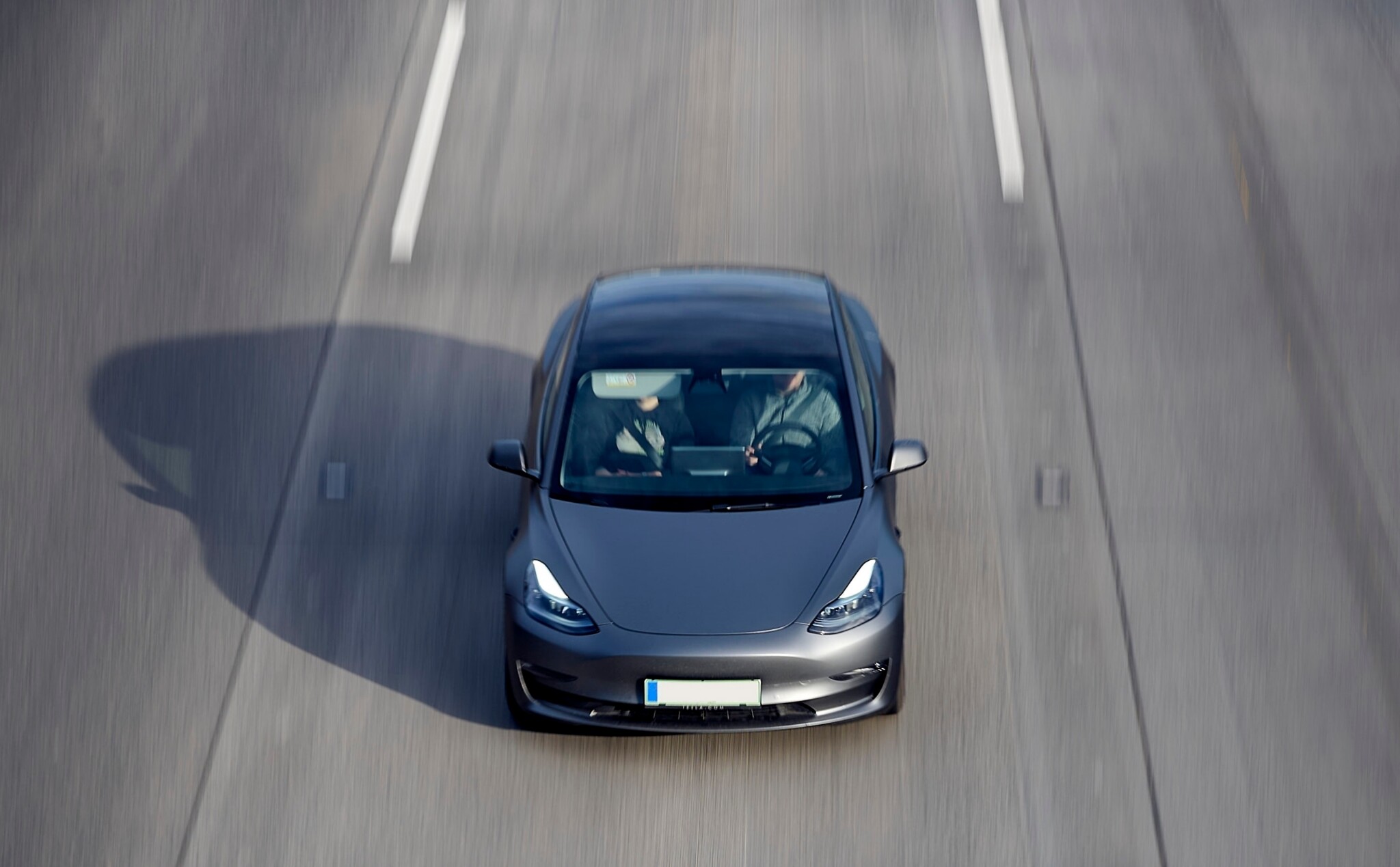
Sold not by billboards, but by the people behind the wheel.
From carmaker to something else
The milestones of the past two years suggest that what Tesla sells is changing. In October 2024 it revealed the Cybercab, a two-seater with neither steering wheel nor pedals, and in June 2025 it opened a limited robotaxi service in Austin. In January 2026 Tesla announced the end of Model S and Model X production, with factory space in Fremont handed to the Optimus humanoid robot. The first production Cybercab followed a month later. Over the spring and summer, robotaxi services launched in Dallas, Houston, Miami, Orlando and Tampa. In September, paid Cybercab rides began in Austin, even as US regulators examined how Tesla certifies its own safety compliance.
Against that trajectory, the flying Roadster looks like an anomaly. Tesla is recasting itself as an autonomy and robotics business, and Musk has said the Roadster is unlikely to generate much revenue. He has called it the only car Tesla will make in the long term that people drive themselves.
Yet that is precisely why it matters. The Roadster is less a revenue line than a hook: a reminder of the thrill that first drew people to the brand, arriving just as Tesla needs them to follow it into a driverless future. The lesson for other brands is not that they need a billionaire and a rocket. It is that Tesla understood what its audience wanted to feel long before it had worked out how to build the product. By selling status, novelty and safety, it cultivated a tribe willing to do the selling on its behalf. For most of its history, Tesla’s customers have been its media plan.