
Sydney Sweeney’s Latest Ad Worked. That’s Why People Are Angry.
15/09/2026 | Lee Taylor
By · 15/06/2026 · 4 min read
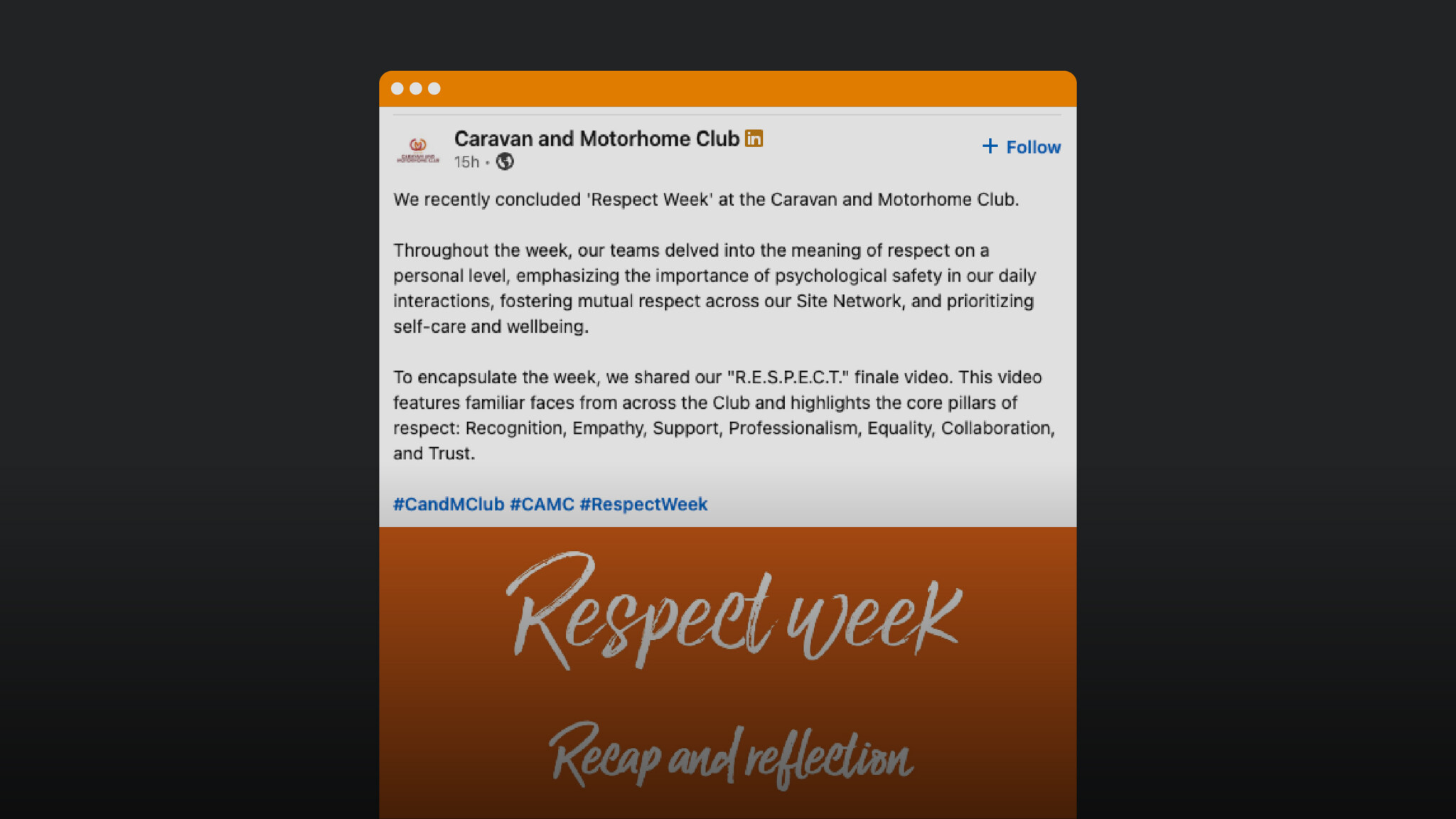
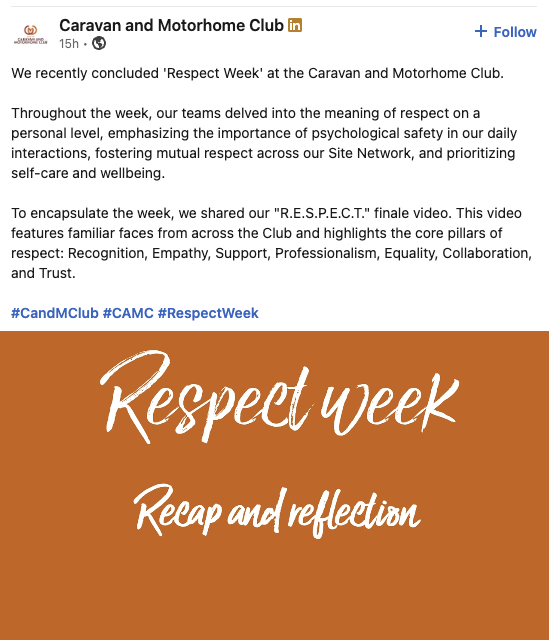
The Caravan and Motorhome Club was founded in 1907. It claims to speak for a million caravanners, runs around 200 club campsites and 2,500 member-only Certificated Locations. And this week it used its public LinkedIn page to publish a recap of its internal ‘Respect Week’, complete with a backronym – R.E.S.P.E.C.T: Recognition, Empathy, Support, Professionalism, Equality, Collaboration, Trust – along with reflections on “the meaning of respect on a personal level”, “psychological safety”, “self-care and wellbeing”, and a finale video. All of it served up to an audience of caravanners who logged on wanting to know about site availability in the Lake District.
It’s easy to laugh at this. Plenty of people did.
The laugh is a mistake, because what you are looking at is capture at the late stage. When an ideology has reached the caravan club, it has reached everywhere. There is no brand less threatening or more thoroughly British than the Caravan and Motorhome Club; if the ideology has reached here, the war for corporate Britain is already lost, and the wrong side won it. I have written before that it takes a long time for a whale washed up on a beach to decay to just bones. This post is what the process looks like from the outside.
“Psychological safety” did not come from caravanning. It came off American campuses, got picked up at HR conferences, and ended up in the people departments of British firms that should have known better. And here is the detail that gives the game away. The Club’s post uses American spellings. “Emphasizing.” “Prioritizing.” A 119-year-old British heritage institution writing in the dialect of a San Francisco wellness seminar. That is not a typo; that is the import label still attached to the crate. Nobody who loves this brand wrote those words.
Why does any of this matter? Because the ideology behind the language is poisonous, and not in some vague, abstract sense. Follow the logic through. It starts by recasting grown adults as fragile – an employee who needs a themed week and a video ceremony to grasp the concept of respect is being handled as a safeguarding case, not a colleague. Then it manufactures the very grievance it claims to cure. Tell a workforce daily that it is psychologically unsafe and, sure enough, it will begin to feel unsafe, at which point the programme expands to meet the demand it created. Neat trick. And none of it is new. The workshop where colleagues sit in a circle and reflect on their attitudes has a direct ancestor in the Maoist struggle session: confess the incorrect thought, affirm the approved values, repeat until sincere. The twentieth century ran that experiment at national scale and the results are not in dispute. We just gave it a lanyard and a finale video. Underneath it all sits a permanent internal bureaucracy whose budget, headcount and away-day calendar depend on the problem never, ever being solved. (I have written previously about HR departments being handed far too much power in the name of empathy and wellness.) I’m yet to hear of a great company built by its HR department; I can name several held back by one.
We know where this road ends, because other brands have driven down it at speed. Bud Light cost Anheuser-Busch $1.4 billion in lost North American revenue when ideology reached its shop window. Gillette lectured its own customers about masculinity and never got that audience back. The Caravan Club hasn’t insulted its members yet. It has merely bored and bewildered them. It’s the same disease at an earlier stage. It won’t stay early.
Now think about what was squandered. A claimed million caravanners, 2,700 places to pitch a van and 119 years of touring history – the sort of heritage most marketers would kill for. All of that, and the channel got spent on an internal ceremony nobody outside the building asked to see. Marketing is supposed to sell things, and it works when you understand the customer well enough to say something they actually want to hear, at the moment they want to hear it. What do the Club’s members actually want? Good sites, fair prices, a booking system that works. Not one of those things appears in a backronym.
Of course companies should treat staff decently. There’s nothing wrong with that. But decent treatment doesn’t need an acronym. It certainly doesn’t need a finale video. Respect is a behaviour, not a programme. The moment it becomes a programme, it has become someone’s job, and that someone now needs you to keep failing at it.
So here is the demand, plainly put. Get this ideology out of the business – off the public channels first, then out of whichever budget line it has nested in. Marketing talks to customers and HR sticks to payroll. The therapy sessions stay in-house, if they happen at all.
Members want a decent pitch at a fair price and a booking system that works. Give them that, and keep the lanyards in the office.
Want marketing that talks to customers instead of staff committees? Get in touch.
