
Dropping a Caravan on It: Why Toyota Went Back to 2003
01/10/2026 | Uncommon Sense
By · 19/08/2026 · 5 min read
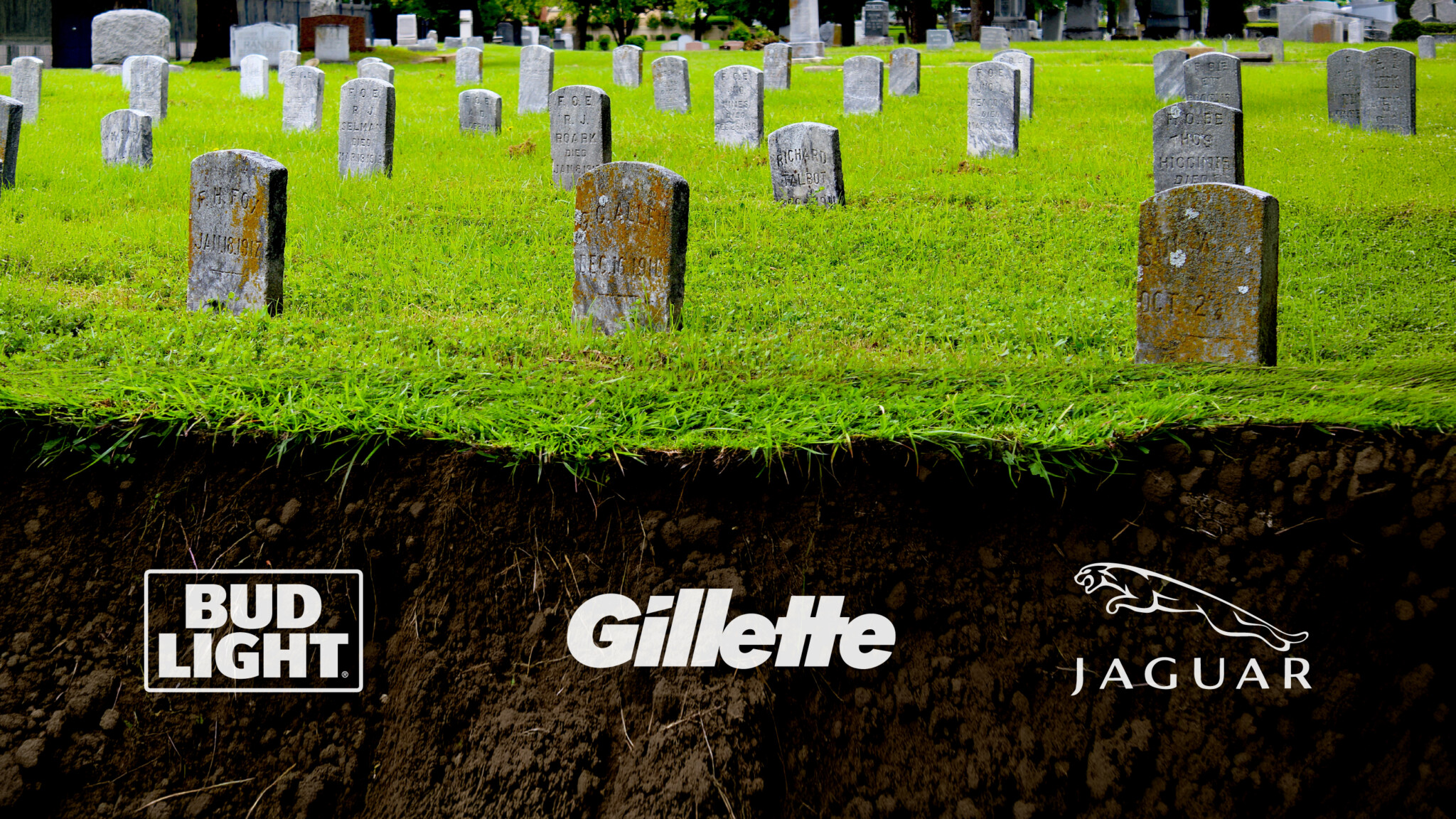
A tour of the brand graveyard, where the epitaphs all read the same: we stopped selling to the people who were buying.
Brand strategy used to mean something specific. You worked out what your customer valued, then you’d build something to resonate with a distinctive notion in their mind. That was it. Al Ries and Jack Trout wrote the book on it in 1981, and the title said everything: *Positioning: The Battle for Your Mind*. Not the battle for social justice or the approval of a Cannes jury. The customer’s mind.
Then the industry discovered “purpose,” and the discipline went out the window. Suddenly every brand needed a reason to exist beyond making money. Mayonnaise acquired a social mission. Beer developed political opinions. And luxury cars started disowning their own heritage to chase a buyer who had never bought one and never would.
The investor Terry Smith saw it coming. In 2022 he took aim at Unilever’s obsession with assigning worthy causes to condiments: “A company which feels it has to define the purpose of Hellmann’s mayonnaise has, in our view, clearly lost the plot.” He was right. But the damage goes well beyond mayonnaise, and we now have the numbers to prove it.
Take Jaguar. In November 2024 the company unveiled a rebrand that amputated everything the marque had spent eighty years building. The leaping cat was replaced with a stylised wordmark that could belong to a fintech startup or a fragrance house. The launch film featured androgynous models in primary colours and not a single car; “Copy Nothing,” it declared, while copying every fashion campaign of the previous decade. Jaguar’s brand equity rested on specific things: British engineering, sporting heritage, a certain understated menace. E-Types, Le Mans wins, the inspector’s car in every ITV drama. All of it was jettisoned in pursuit of a younger, progressive, design-conscious buyer who, on the available evidence, doesn’t exist in commercially meaningful numbers. The evidence duly arrived. In April 2025, Jaguar registered 49 cars across the whole of Europe, against 1,961 in the same month the year before. That’s a fall of 97.5%. Credit where it’s due: production was paused ahead of the EV relaunch, and sales had been sliding since 2018. The defenders will tell you this at length. But a brand pausing to reload doesn’t need to torch the ammunition. Existing customers couldn’t recognise the marque they had been loyal to for decades, and prospective ones were given no reason to care. Call it what it was: a resignation letter written in Helvetica.
"Copy Nothing" lost them everything. 49 cars across Europe in a month.
Bud Light managed something similar in less time. Its marketing VP announced publicly that she wanted to move the brand away from its “fratty” image, which is a polite way of telling your existing customers they are the wrong sort of people. The customers took the hint and left. Anheuser-Busch lost around $1.4 billion in revenue, Modelo Especial took the crown as America’s best-selling beer, and by early 2025 Bud Light sales were still sitting roughly 40% below where they were before the boycott. Two years on. No recovery. That’s not a stumble. Modelo now owns mental territory Bud Light will never get back, and all it did was sell beer to people who wanted beer.
Gillette got there first, of course. “The Best Men Can Be” lectured its own base about toxic masculinity in 2019, and the brand absorbed an $8 billion writedown while P&G’s leadership suggested lost customers were a price worth paying. Dollar Shave Club and Harry’s, meanwhile, got on with selling razors.
Even Nike, once the most disciplined brand builder on earth, drifted. Somewhere along the way Nike stopped being a performance brand and became a marketing department with a shoe habit. Hoka and On ate its running business by the radical method of making better trainers.
And the industry knows it. Wired, hardly a bastion of reaction, declared in 2025 that the era of woke brand activism is over. Mastercard, PepsiCo and Target have all quietly scaled back the Pride activations and purpose theatre of the previous decade. Nobody issued a press release admitting the strategy failed. They just stopped. Watch what companies do, not what they say.
So what does brand strategy look like when it’s done properly?
It looks like the unglamorous business of occupying psychological territory. People choose brands for reasons that predate the news cycle by several hundred thousand years: status signalling and tribal belonging, mostly. Thorstein Veblen worked out in 1899 that purchasing is signalling; nothing since has disproved him. Byron Sharp’s research adds the practical layer – brands grow through mental and physical availability, being easy to think of and easy to buy, not through moral instruction. Positioning works when it starts from how customers actually see value, rather than what a workshop full of strategists wishes they valued. (I’ve sat in those workshops. The distance between the flipchart and the checkout is usually measured in light years.)
The brands winning right now confirm it. Dollar Shave Club offered better value with a sense of humour and no sermon. Modelo, as we’ve seen, just sold beer. Hoka and On built exceptional products and got out of their own way.
You may say: what about Patagonia? It’s the exception that explains the rule. Patagonia’s environmental stance works because it’s the founding DNA of the company – embedded in the product, the supply chain, and forty years of consistent behaviour, right up to Yvon Chouinard making the environment the company’s effective sole shareholder. The academic research on “woke-washing” backs this up: consumers judge purpose on sacrifice, fit and consistency of practice, and they can smell a bolt-on from a hundred yards. Every brand that tries to photocopy Patagonia fails precisely because they’re gluing a cause onto a product and hoping nobody checks the join. Customers always check the join.
Brands sell things. That’s the job. A harder and more honourable one than the purpose industry admits. A manifesto is what you write when you’ve run out of reasons for anyone to buy your product.